
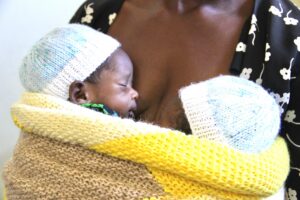
 In late 2025, the American Academy of Neurology published an article showing an association between skin-to-skin contact prior to hospital discharge for preemies born before 32 weeks. The authors’ findings suggested benefits “related to brain development . . . in areas tied to emotion and stress regulation.”
The methods of the study included documenting which family members provided skin-to-skin care and for how long. Brain scans were also conducted at the time the babies reached full-term or 40 weeks, prior to going home from the hospital. The scans were then used to compare specific markers of brain development with the amount of skin-to-skin holding.
The authors reported that “white matter development (the tissue that lets parts of the brain communicate with one another) was impacted by the preterm infant’s experience while in the hospital . . . to skin-to-skin care.” This strategy appears to support bonding and may also promote new connections within the brain, improving the baby’s overall brain health. Visit the full text of the journal article here.
The ICC-Recommended Early Start Personnel Manual (ESPM) describes core knowledge and role-specific competencies needed for early intervention service provision, incorporating current research and evidence in the field of early intervention. Click here to access the ESPM. Scroll down to find the ESPM entry.
This resource is related to the following ESPM knowledge-level competencies:
- Core Knowledge (CK):
- CK3: The prenatal care, delivery, and postnatal care of the infant, including variations across families, cultural, and ethnic groups.
- CK4: The range of typical infant/toddler physiological factors, such as early neurological/brain development.
- Individualized Family Service Plan Development and Review (IFSP-DR):
- IFSP-DR5 (EIS): Understands the rationale for the identification and selection of intervention strategies used in everyday routines, relationships, activities, places, and partnerships for early intervention activities.
- Individualized Family Service Plan Implementation (IFSP-i):
- IFSP-i3 (EIS): Knows generic and specific evidence-based early intervention strategies to support all areas of development.
- IFSP-i10 (EIS): Knows strategies that support parents in providing basic health, nutrition, and safety for infants and toddlers in natural environments.
- IFSP-i11 (EIS): Knows strategies that support parents in adapting the natural environment to meet infant/toddler developmental needs.